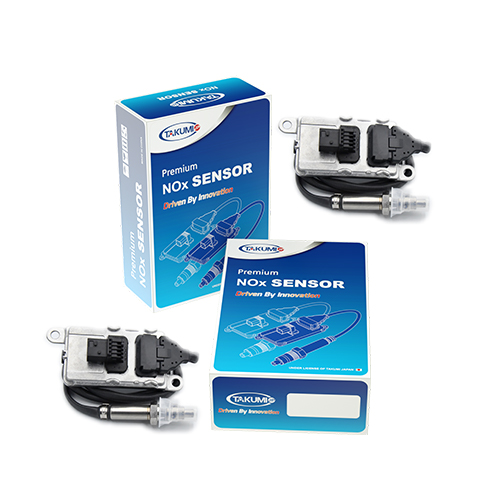
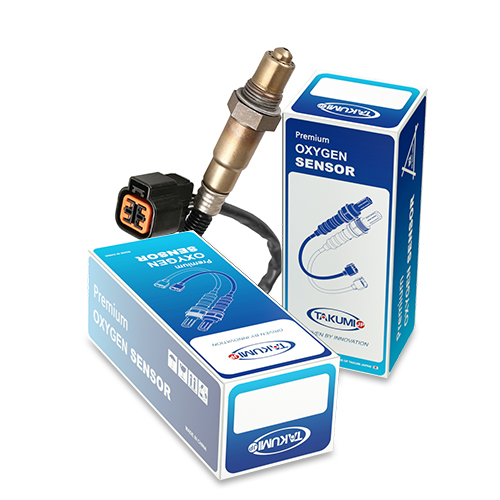
Modern cars and engines need Takumi oxygen sensors (O2 sensors) or nox gas sensor. To detect fuel mixture or emission control issues and preserve engine performance, exhaust gases are oxygenated. Due to the growing importance of fuel economy and pollution restrictions, automobile owners and technicians often discuss oxygen sensor prices. Vehicle type, model, sensor location, and quality affect oxygen sensor prices. Depending on the manufacturer, a basic oxygen sensor (O2 sensor) may cost $20 to $100, while more complex sensors used in high-end or performance automobiles might cost $200 or more. Nevertheless, labour to replace an oxygen sensor may increase the cost. If the sensor is hard to access or requires special equipment, labour costs might exceed $100-$150. Brand, location, oxygen sensor type, and wholesaler/retailer markup affect the ultimate pricing.
Takumi oxygen sensor car are mostly made of zirconia and titania. Zirconia oxygen sensors Most oxygen sensors are zirconia. Zirconia sensors use platinum-coated ceramic discs. The sensor's tip is constantly exposed to vehicle exhaust oxygen. Zirconia O2 sensors measure exhaust gas oxygen via a voltage difference. Based on oxygen sensor voltage, the engine control unit (ECU) may adjust fuel delivery to maximise performance.
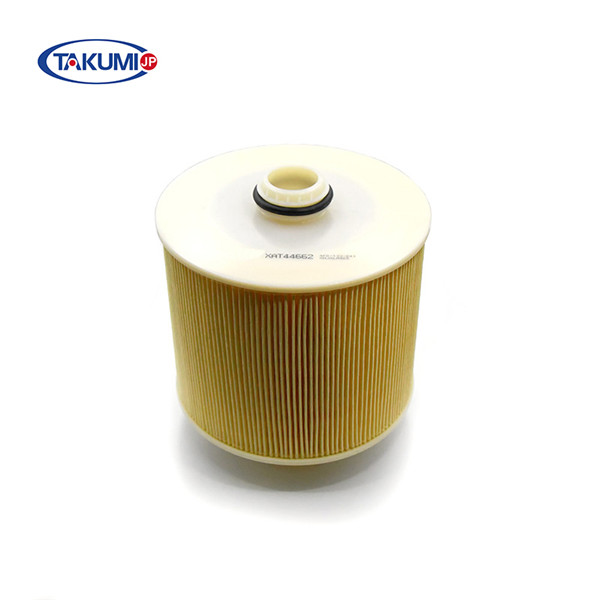
Takumi Titania O2 sensors use titanium dioxide and exhaust gas oxygen to perform (TiO2). Titanium dioxide's resistance changes with oxygen content, affecting the ECU signal. Titania sensors are popular because they are more accurate and react faster than zirconia sensors.
.jpg)
Takumi oxygen sensor cost can vary greatly depending on placement. Oxygen sensors usually go before and after the catalytic converter.
.jpg)
Sensors before the catalytic converter usually cost more. The Takumi sensor must be able to withstand extremely high temperatures and corrosive chemicals in engine exhaust before the catalytic converter.
Takumi Japan auto parts business section is focused on the development, production, and marketing of Ignition System parts, Filtration system parts & Hybrid batteries around the globe. Takumi Japan's offerings are renowned for their innovative technologies and have gained a lot of customer satisfaction. Takumi Japan is a well-respected company that has created a professional team for international markets.
A distributor is selected for each region. Our range of products includes automotive and motorbike parts, such as spark plugs to power industrial generators, spark plugs for motorcycles, filters and ignition cables, bearings and spark plugs. Our brand is a symbol of Japanese technology, and our products are comparable to OE in terms of quality.
We are equipped with 42 completely automated production lines, and the annual capacity for production of 300,000,000 super"Torchs" is growing quickly. Takumihas Professional spark plug Research Institute and Testing Centre is the Secretariat Unit of the Sub-Committee of National Automobile Standardization Technical Committee. It has reached the top quality in the field.
Takumi's main product line is the manufacture of spark plugs and spark plug wires. It's been developing for over a quarter-century. And develops diversified industries, including Water pumps, Water Seal, special ceramics, Ignition Coil, Ignition Cable, Filter, Generator and many more. Iridium Spark Plugs, Platinum Spark Plugs, Copper-core Spark Plugs Iridium Sparkplugs, pin to pin sparkplugs are all extensively used in automobiles motorcycles, small Gasoline engines, Gas engines, Industrial engines, and many other industries. Over 40% of the domestic manufacturing workforce are employed by OEM, and exported to Europe, North America and South America. The industry's leaders are the ignition coil design and high-quality. Natural gas engine products comprise more than 60 percent.
After-Catalyst Changer Takumi o2 sensor work in colder temperatures and harsher chemicals. After-catalytic converter sensors are cheaper. Complex engines and vehicles may need multiple oxygen sensors spaced along the exhaust pipe. Even after the catalytic converter, these specialist sensors may cost more than a standard sensor.
Brand and quality affect Takumi oxygen sensor prices. It's well known that high-end sensors from well-known brands cost more than budget sensors from unknown brands. Superior sensors are more durable and consistent. Low-cost oxygen sensors usually cost more. Poor sensors may reduce engine performance, fuel efficiency, and emissions. Inexpensive sensors may potentially malfunction, resulting in costly maintenance.
Finally, distributors and retailers may mark up Takumi o2 oxygen sensor prices. This markup may vary greatly from seller to seller, making platform comparisons difficult.
Shop around for oxygen sensors to save money. Online shops may be cheaper than brick-and-mortar businesses, but it's important to purchase from a reputable seller that guarantees their products.
 EN
EN  AR
AR DE
DE ES
ES FR
FR HI
HI JA
JA PT
PT RU
RU